You live in an older or inefficient U.S. home.
The building may have aging equipment, uneven insulation, noticeable drafts, or an unclear maintenance history.
 The Home Savings Handbook
The Home Savings Handbook · 2026 evidence edition
Find the leaks, loads, and everyday fixes worth addressing before bills or repair decisions get more expensive.
A FIELD MANUAL FOR U.S. HOUSEHOLDS
A quick fit check
It was written for people who pay the bills or help make decisions about the place they live.
The building may have aging equipment, uneven insulation, noticeable drafts, or an unclear maintenance history.
You want to distinguish weather, usage, air leaks, equipment, and rate changes before spending.
Homeowners can plan repairs and compare quotes. Renters can document problems and use low-risk, non-permanent steps within their lease.
For renters: the bill analysis, observation, and low-risk action sections are useful when you pay your own utilities. Get landlord approval before altering equipment or the building.
Inside the guide
MONTHLY COST BASELINE
Turn utility bills, weather, and household use into a baseline you can compare.
Eight climate paths help separate broadly useful steps from region-specific work.
PROJECT COMPARISON
What problem does this quote solve?Use the workbook to document scope, evidence, price, and verification before signing.
Actual pages, not mockups
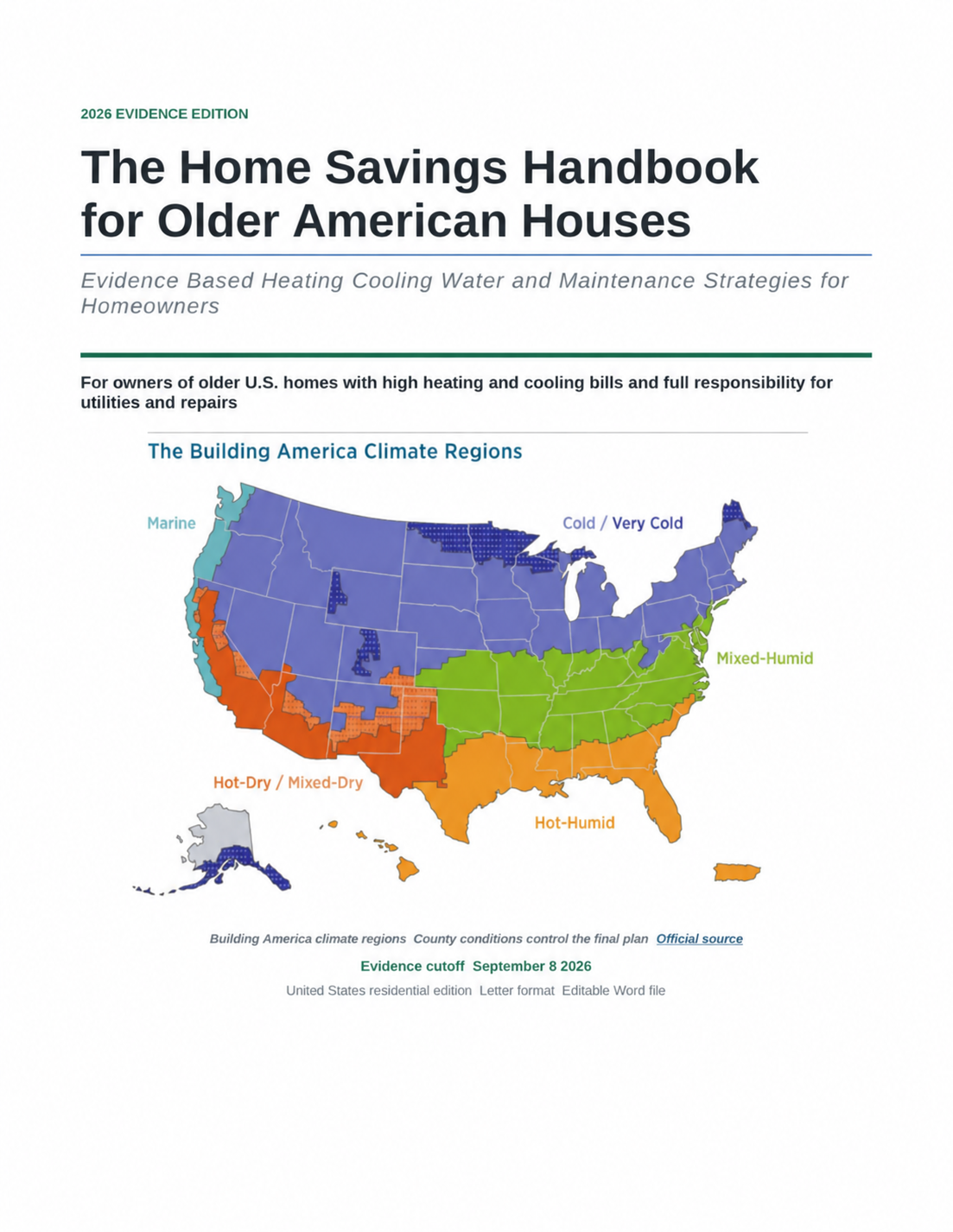
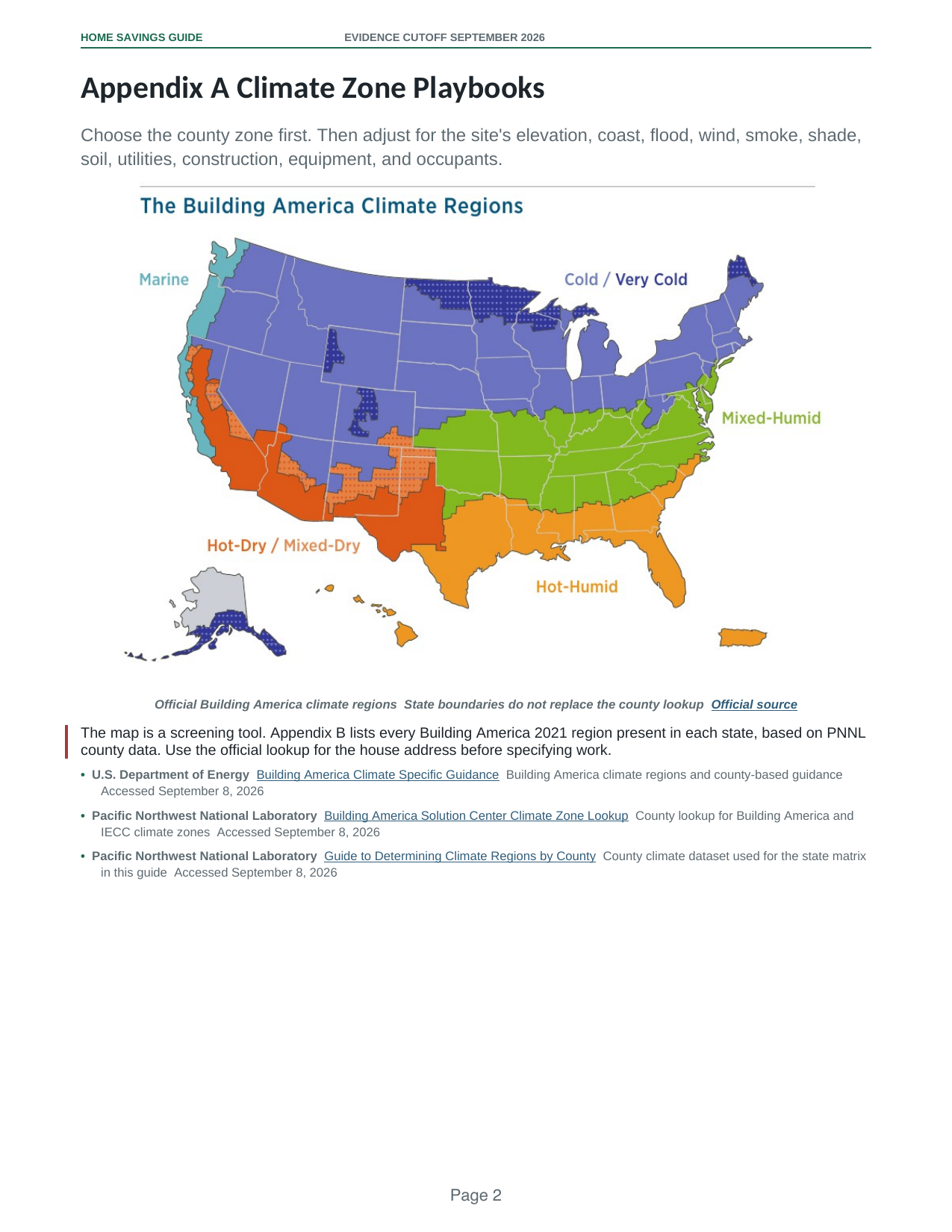
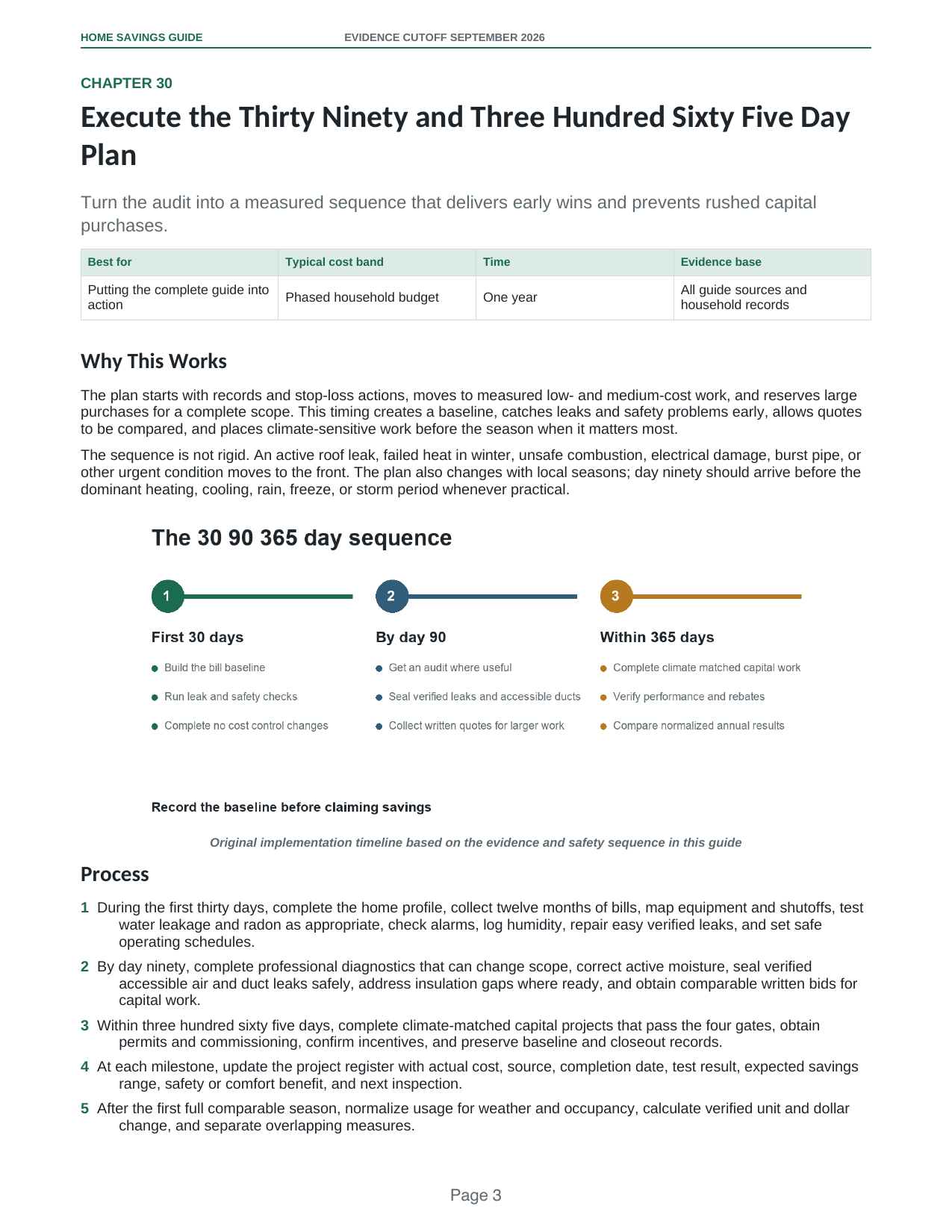
Every image below is a rendered page from the current manual files.
Start with practical checks and prioritize the work worth doing first.
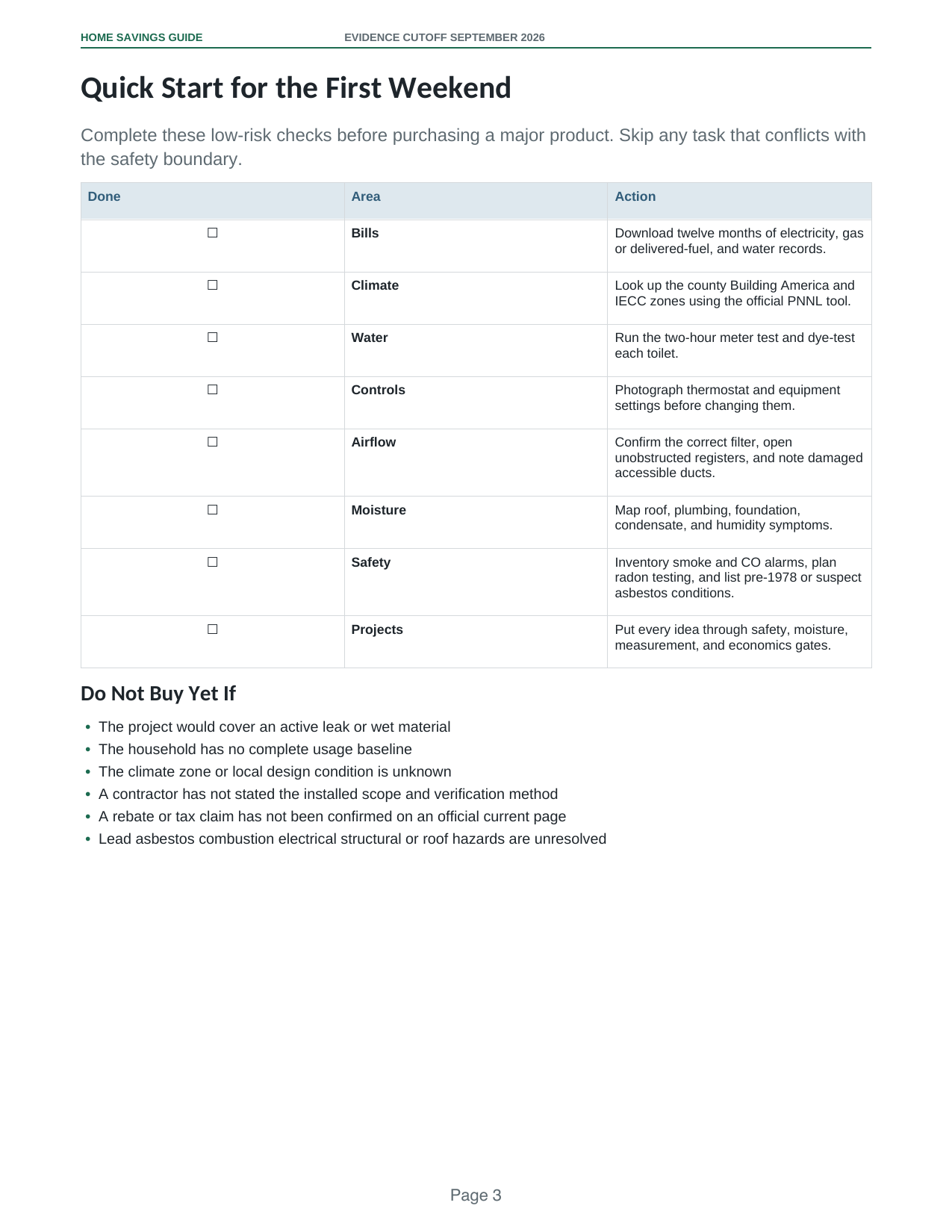
Adjust decisions for location, climate, evidence strength, and local conditions.
Record findings, compare projects, and build a realistic action plan.
How the guide works
01 — Measure
Organize bills, fuel use, weather, water, comfort, and room-by-room clues so the problem has a starting point.
Use the workbook ↗02 — Inspect
Separate air leakage, insulation, equipment, moisture, and maintenance issues before choosing a remedy.
Explore the guide ↗03 — Prioritize
Compare cost, climate fit, expected evidence, and how the finished work will be checked.
Get the decision system ↗Complete contents
Open each part to see every chapter across the three-part guide set.
Evidence and limits
The manual translates public guidance into a household decision workflow. It does not turn national averages into promises about one home.
DOE, ENERGY STAR, EPA, EIA, PNNL, and other public authorities are identified where they support a claim or decision.
Recommendations change with climate, fuel, system type, rates, moisture, construction, occupancy, and completed-work quality.
Urgent hazards and active water damage outrank payback. Electrical, combustion, structural, mold, asbestos, and similar risks may require a qualified professional.
Sources were reviewed through September 8, 2026. Programs, codes, rebates, rates, product guidance, and tax rules can change.
This is educational material—not a home inspection, engineering report, contractor scope, or legal, tax, medical, or financial advice. Agency and program names remain the property of their owners and do not imply endorsement.
Three-part digital package
Three focused PDFs: a 44-page Core Action Guide, 22-page Climate & Evidence Reference, and 18-page Homeowner Workbook. All use U.S. Letter format.
$19.90
Frequently asked
The Climate & Evidence Reference PDF includes state, district, and climate-zone guidance. It also explains when county, utility, and house-specific conditions need a closer check.
Yes—especially renters who pay their own utilities. The bill analysis, observation, and low-risk action sections can help you document problems and talk to your landlord. Get permission before altering equipment or the building.
No. Results vary by home, climate, equipment, fuel prices, behavior, and the work completed. The guide explains evidence and conditions rather than offering a blanket percentage.
Yes. It helps you document the problem and compare like-for-like scopes before approving a major project.
Exactly three PDF files: the 44-page Core Action Guide, 22-page Climate & Evidence Reference, and 18-page Homeowner Workbook. There are no additional download files.
No. The guide helps you document symptoms, ask better questions, and recognize limits. Safety, code, structural, combustion, electrical, and health concerns may require qualified local professionals.